Conditions
Coronary Angioplasty
in London
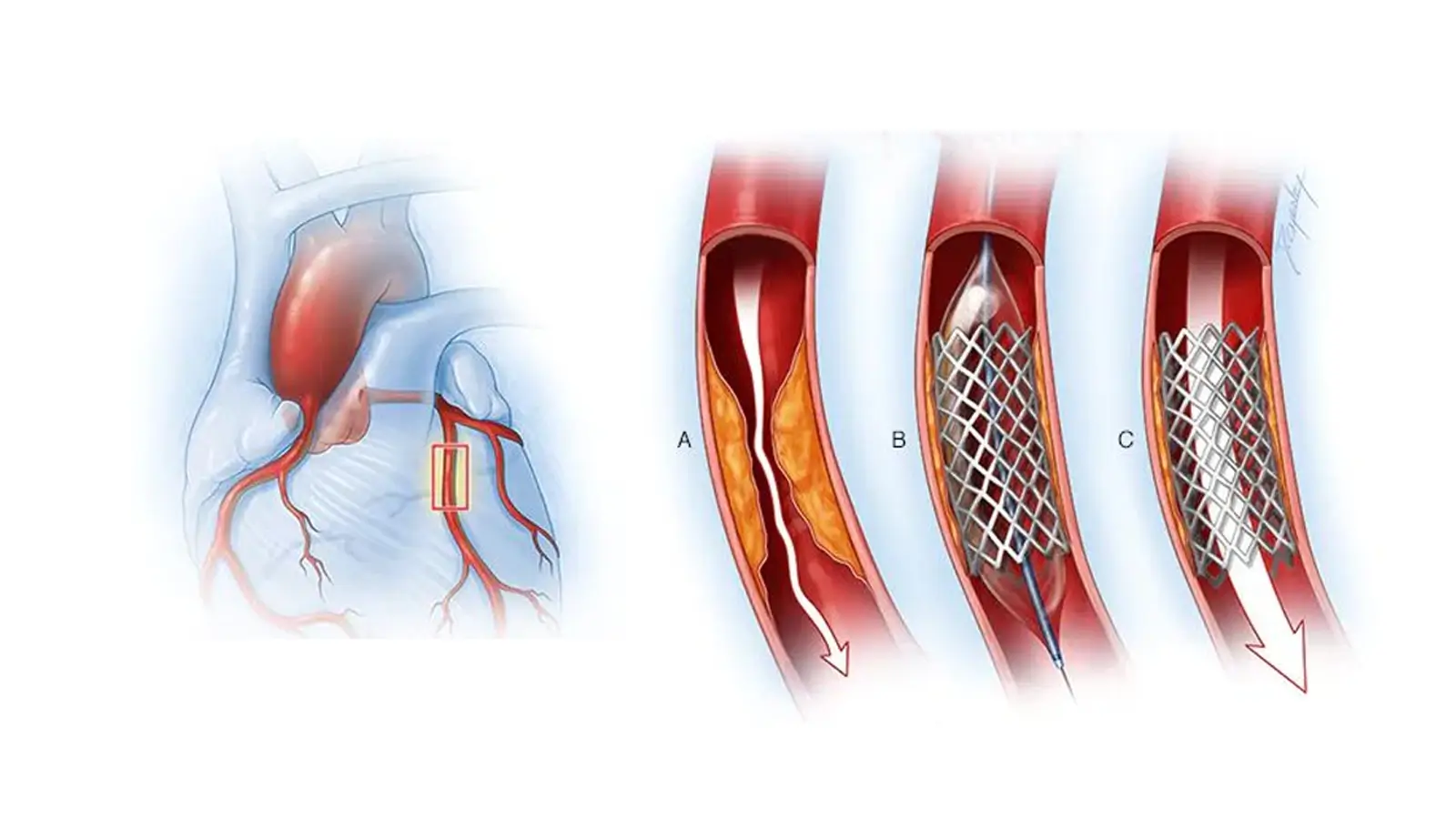
Coronary angioplasty is a common and highly effective treatment used to improve blood flow to the heart muscle. It works by widening narrowed or blocked coronary arteries and usually involves placing a small metal mesh tube called a stent to keep the artery open.
A private coronary angioplasty is performed by Dr Omar Ali, an experienced Consultant Cardiologist specialising in advanced interventional heart procedures.
Before Your Angioplasty
Before the procedure, you will usually have a coronary angiogram, which allows Dr Ali to see the heart arteries using X-ray imaging and identify the exact location and severity of any blockages. In many cases, the angiogram and angioplasty are carried out during the same procedure.
You will also be prescribed antiplatelet medication to reduce the risk of clot formation:
The procedure typically takes 30 minutes to two hours.
Some patients experience mild chest discomfort when the balloon is inflated. This is usually temporary and settles once the stent is in place.
At the end of the procedure, a compression wrist band is applied to prevent bleeding, and you will be able to sit up and walk shortly afterwards with nursing support.
Why Is Angioplasty Performed Through the Wrist?
Many leading heart centres now use radial (wrist) access for coronary angioplasty. Dr Omar Ali has many years of experience with this technique, which international research supports as the preferred approach for most patients.
Benefits of wrist (radial) access include:
Some mild wrist discomfort can occur, but this is usually short-lived and well controlled with local anaesthetic and pain relief.
How Successful Is Coronary Angioplasty?
Coronary angioplasty is a highly successful and safe procedure. Serious complications are rare. In a very small number of cases (less than 1 in 300–400), further treatment such as additional stenting or bypass surgery may be required.
Dr Omar Ali’s experience and use of modern techniques help minimise risks and ensure excellent outcomes.
What Our Patients Say

Highest level of professionalism and competence, extremely pleasant experience from a top expert in the field. It is a pleasure and genuine luck to be visited. Could not recommend enough. Grazie mille ed a presto!
Very professional and attentive to his patients. Very knowledgeable and also very friendly.
Very friendly and welcoming consultation both by the team which carried out my tests, and his admin staff who dealt with my booking and arrangement. Very thorough set of tests.
Welcoming consultation both by the team which carried out my tests, and his admin staff who dealt with my booking and arrangement. Very thorough set of tests.
Book an appointment
By taking a proactive approach to your heart health, you can reduce your risk of heart failure and maintain your overall health and well-being. Remember, heart failure is a serious medical condition, but with the right care and support, it is possible to manage your symptoms and improve your quality of life.