Tests
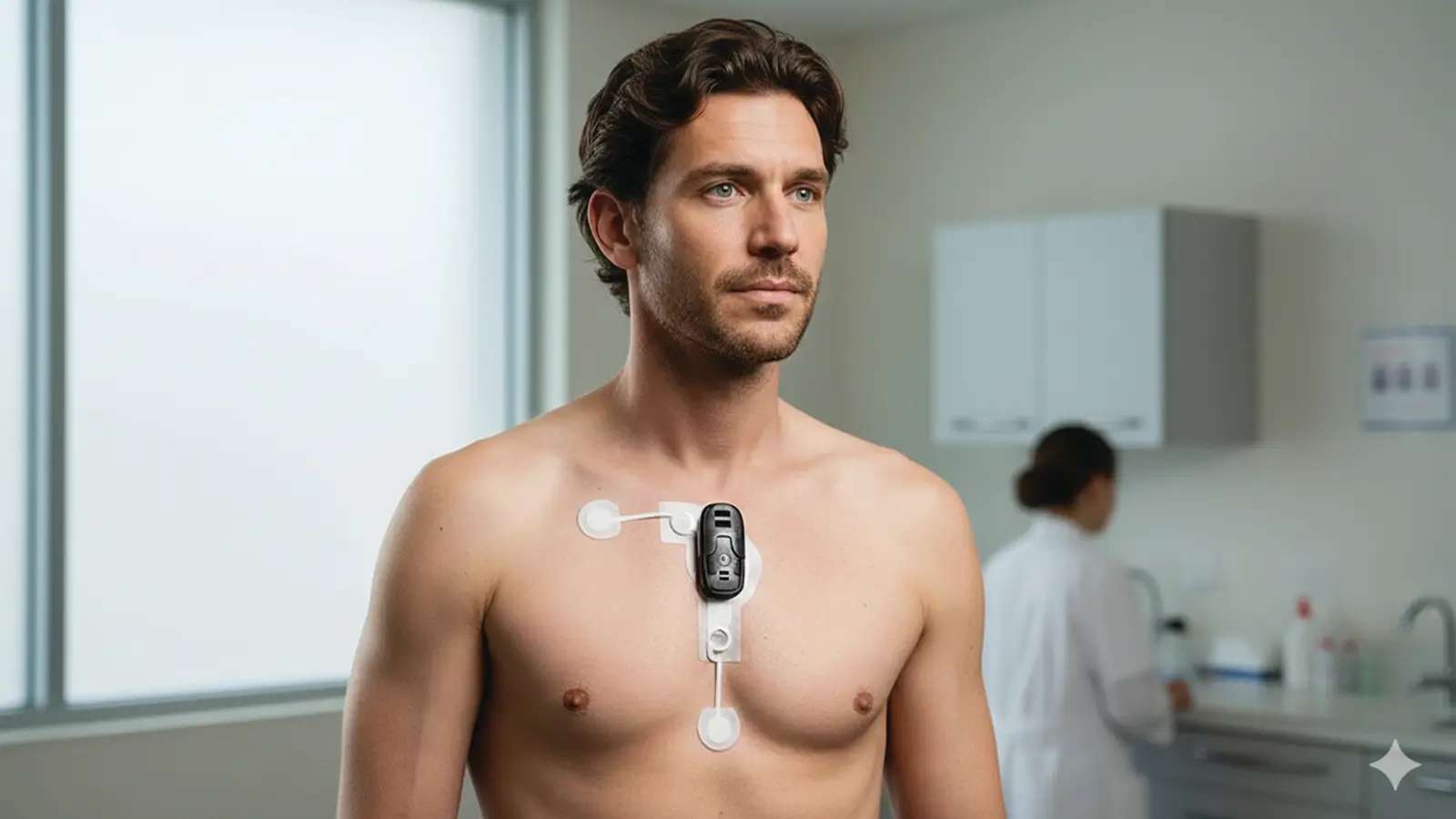
Holter Monitor (24–48 Hour ECG)
If your symptoms occur regularly, I may advise a 24- or 48-hour ECG monitor, often called a Holter monitor or ambulatory ECG.
You will be asked to wear a small, lightweight electronic recorder for one or two days. The device is discreet, painless, and easy to wear under your clothing.
If you experience palpitations or other symptoms while wearing the monitor, you’ll be asked to note the time of the episode. The time is clearly displayed on the front of the device, making this simple to do.
When you return the monitor to us after 24 or 48 hours, we analyse the recording using specialist software. This allows us to match your symptoms with any changes in your heart rhythm, helping us reach an accurate diagnosis.
Cardiac Event Recorders (Longer-Term Monitoring)
If your symptoms are less frequent, I may recommend a cardiac event recorder, which monitors your heart rhythm over a longer period.
There are two main types of event recorder:
An implantable loop recorder (ILR) sometimes called an injectable loop recorder is a small device placed just under the skin of the chest to continuously monitor your heart rhythm. The procedure is performed under local anaesthetic and is quick-takes less than 10 minutes and minimally invasive. The device can monitor your heartbeat for up to three years, making it particularly helpful for detecting heart rhythm problems that occur infrequently.
Client Testimonial

Highest level of professionalism and competence, extremely pleasant experience from a top expert in the field. It is a pleasure and genuine luck to be visited. Could not recommend enough. Grazie mille ed a presto!
Very professional and attentive to his patients. Very knowledgeable and also very friendly.
Very friendly and welcoming consultation both by the team which carried out my tests, and his admin staff who dealt with my booking and arrangement. Very thorough set of tests.
Welcoming consultation both by the team which carried out my tests, and his admin staff who dealt with my booking and arrangement. Very thorough set of tests.
Book an appointment
By taking a proactive approach to your heart health, you can reduce your risk of heart failure and maintain your overall health and well-being. Remember, heart failure is a serious medical condition, but with the right care and support, it is possible to manage your symptoms and improve your quality of life.