Tests
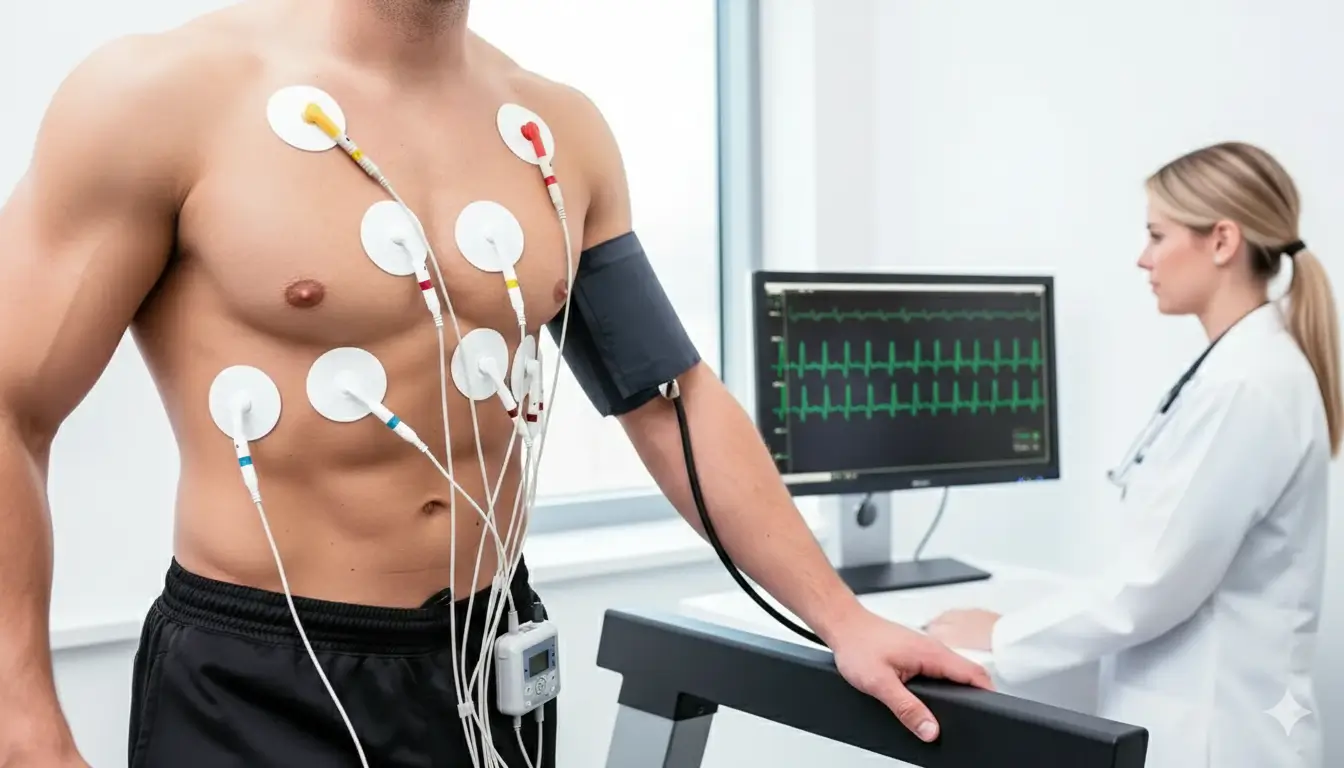
What happens during the test?
You will walk on a treadmill, starting at a slow pace. Gradually, the speed increases and the treadmill tilts to simulate walking uphill. You are always in control and can stop the test at any time if you feel unable to continue.
During the test, we continuously monitor:
Once the test is complete, you will sit or lie down while your heart rhythm and blood pressure are checked as they return to normal.
Preparation for your test
No special preparation is required.
Chest hair may need to be shaved to allow the ECG electrodes to stick properly. This can be done at the time of the test.
Chest hair may need to be shaved to allow the ECG electrodes to stick properly. This can be done at the time of the test.
Client Testimonial

Highest level of professionalism and competence, extremely pleasant experience from a top expert in the field. It is a pleasure and genuine luck to be visited. Could not recommend enough. Grazie mille ed a presto!
Very professional and attentive to his patients. Very knowledgeable and also very friendly.
Very friendly and welcoming consultation both by the team which carried out my tests, and his admin staff who dealt with my booking and arrangement. Very thorough set of tests.
Welcoming consultation both by the team which carried out my tests, and his admin staff who dealt with my booking and arrangement. Very thorough set of tests.
Book an appointment
By taking a proactive approach to your heart health, you can reduce your risk of heart failure and maintain your overall health and well-being. Remember, heart failure is a serious medical condition, but with the right care and support, it is possible to manage your symptoms and improve your quality of life.